Sociology Blog

Thursday, December 23, 2010

"I Now Pronounce You...Single and Parenting"

Today, it seems the only constant thing in life is change. Our values have changed, along with our economics, technologies, and the way we view families. Different types of families are much more accepted today than they were 50 years ago. Families and marriage have always been institutions that people valued, yet our ideologies towards them are in transition. Marriage used to be the first step into adulthood. Today, it is the last. Additionally, there is a contradiction between the things we value. Although we respect marriage, we also treasure individualism. People jump into short-term relationships because they feel they will gain personal growth from it. It has been observed that in modern day society, it is common for people to have children in these unstable relationships. However, if an individual has children, other temporary relationships they have in the future can cause a lot of turbulence in the lives of their kids. In a world that is constantly changing, I feel that the best option is for parents to simply remain single, especially after the emotional strain of a divorce. With this, the child has some sense of stability in their lives and they have one less thing to adjust to. Parents have the responsibility of putting their child first and asking themselves: "When everything else in the world is changing, shouldn't my child, at the very least, experience invariability in their home?"


As a parent, one must consider the happiness of their child or teen and evaluate the harm it may cause them by bringing someone new into the picture. Stability is very important for a child's development. For this reason, parents should avoid rushing into relationships, marriages, or cohabiting relationships. Statistics show that almost two thirds of American marriages end in divorce. While some teens cope well with the termination of their parents' relationship, others experience repercussions such as behavioral difficulties at school, anger, low self-esteem, substance abuse problems and often don't accomplish as much as they potentially could in their careers. Divorced or single parents need to adhere to the idea of taking things slowly for the emotional health and stability of their children. Children observe adult relationships and usually apply what they have learned to their own relationships as adults. If a child is living with parents who are incessantly fighting, it creates an undesirable home environment for them and has a major impact on their future. Furthermore, a parent who is no longer devoting time to fighting with a partner may have more energy to give to their kids. Children desire love and devotion from their parents, but when the parent is focusing on their own romantic connections, the child can never understand permanence. Some people disdain the idea of single parent families because they feel it creates social imbalances. However, it is not the single parent families creating the problems, but it is the instability the parents are subjecting their children to. The persistent break-ups parents undergo not only affect them negatively, but their child or teen as well. Continuously bringing someone new into their home is teaching their child that it is acceptable to emulate that example in the future and it is detrimental for that child's emotional state. While parents are so wrapped up in their own erratic emotions, they fail to notice how unhappy their child is because they are not getting the love and attention that children require to grow. Parents need to put aside their personal satisfaction once a child in the picture because even if they don't want to, they have the duty of putting that child first. 


In conclusion, because family is the basic function of a society, it is important for it to remain stable. Single parents have more time to devote to their children and allow them to live in a well-balanced environment, thus maintaining that properly functioning community. In a world that has been changing for more than 20 years now, children need to know that not everything needs to change. Partnerless parents are able to teach their children this not only by remaining single, but also by showing their kid that their unconditional love and affection are feelings that will never, ever change. 

Sunday, November 21, 2010

If You Can't Do the Time, Don't Do the Crime

In our society, laws apply to everyone equally. These laws, that have been modified throughout the centuries, are a result of people deeming acts as sinful against their values and beliefs. When something bad happened, society took action to make sure those harms weren't committed again. Thus, laws were changed for the betterment of society. As a functional theorist, I believe that these laws unite people because it creates two groups: the people who respect the same values and norms, and the people who don't. Often referred to as "collective consciousness" by famous sociologist Emile Durkheim, these values and norms are principles that society has collectively decided to believe in. However, the people who don't respect this moral code should not be immediately considered criminal. In my opinion, we need to separate criminals into two groups: good person in a bad situation, and bad person in any situation. 


Every society needs crime to function. Crime keeps the business of law intact. For some, the law have given them a job. For others, it has given them security.  Without crime, no boundaries would be marked and there would be no definition to people's values and norms. If the law does not exist, neither does the criminal. Nevertheless, one does not necessarily need to be criminal to go against society's values. There is a difference between being criminal and being deviant. A deviant minor, in my opinion, is someone who has been neglected by their family. To ensure that this individual grows up with the same ethics and morals as everyone else, the family and the community must carry out their respective roles in order to instill these concepts properly. Thus, if a family or the community is neglecting a child, the child will act deviantly. Additionally, the community must work together to create a balance. When there is a problem in society, it is because of the lack of cooperation of one group, and as a result, another group must compensate to secure that balance. As I mentioned previously, there is a difference between being criminal and deviant. So what should we do once the line from deviant to criminal has been crossed?


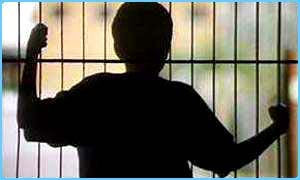
When you are young, you don't think about the repercussions your actions may have on your future. For this reason, I don't think that young offenders should be sent to jail, with the sole exception of murderers. Just as The Younger Offenders Act states in the Confessions and Statements section, the punishment or sentencing must suit the crime. Minors who are deviant are not bad people; they are people who need a stronger support system. Therefore, the thousands of dollars that we, as taxpayers, provide should not go towards housing the minor in a jail cell, but it should go towards sending them and their families to a correctional family center. By this, I mean the family would work together to become stronger, and the parents would learn that supporting their child is a necessity. Not only does this teach the family and the child the values and norms of society, but they end up a happier family. In shorter terms, when the family is not doing their job properly, the government must step in and force that job upon them. Furthermore, there are not only deviant minors, there are criminal minors. There are people that should be classified as abhorrent people no matter what their situation. Some people just can't fit into society. A minor who has been found guilty of killing another person should be immediately locked up. At any age, murder, in my opinion, is the most severe type of crime that can be committed and it should not be pardoned under any circumstances. In the case of a minor killer, the thousands of dollars spent annually to keep them behind bars could potentially result in other people staying alive. Once a murderer, always a murderer. Now it is the responsibility of society as a whole to make sure that anybody that has done the crime, must do the time. 


Monday, October 11, 2010

The Web 2.0: a Place for Education to Grow

Today, it is evident that computers play an essential role in the lives of our generation. From using the Internet as an educational tool, to simply updating a status on Facebook, teens spend on average 30 hours a week on the computer.  Because our generation is capable of using a computer so effortlessly, in a Web 2.0 world, we can use the Internet and computers as an educational facility. Jimmy Wales, creator and founder of Wikipedia (a free online encyclopedia that anyone can edit), believed the same thing. With over 2 million articles written in various languages on this website, learning can encourage the use of digital media. Remember the days when searching up a topic was a tedious task that could take days? Thanks to Wikipedia, within seconds, we are able to search up a topic about virtually anything. With that being said, the ultimate education experience would most definitely incorporate computers in the classroom. This brilliant man's dream does not only stop at an online encyclopedia; in his presentation, he mentioned the creation of free online textbooks. This would be a major step in our education, especially for underprivileged children who do not have the finances to purchase these textbooks. Nicholas Negroponte , founder and chairman of the One Laptop per Child non-profit organization, has dedicated his life to helping these children become educated. And what better way to do that than to expose them to the Web 2.0? In his presentation, Kevin Kelly revealed that the Web is doubling in power every two years. By giving these children a laptop, Mr. Negroponte is expanding their learning resources to a tool that will, by 2040, become more powerful than the human brain. This tool has given us the opportunity to learn and share our ideas, and in addition to Nicholas, Jimmy and Kevin, I believe we should let it. 


The Web 2.0 is a very powerful tool. It consists of Net applications that allow us to file share, file receive and communicate with people all around the world. Fifty years ago, this idea would have sounded absurd. However, today, we are getting used to the idea that nothing is impossible. Sharing our ideas via Web is something our generation has become accustomed to. For example, I have personally shared my ideas and notes to my Sociology class. In our class notes folder, we can find the notes taken by all the students that will essentially aid the other students in understanding the content more in depth. However, our ideas don't need to stop at being shared with a classroom. The Web 2.0 has allowed our ideas to reach as far as those underprivileged children that have been given a laptop in third world countries. Consequently, our thoughts are not only shared with the twenty pupils in our class, but they are also shared with the people of the world. You may be wondering how exactly this will help us learn. The answer is simple: growth. Similarly to how Jimmy Wales and his volunteer team at Wikipedia share their information with the world, everyone can emulate their example and educate each other. To be more specific, because of the Web 2.0, we no longer have one teacher in a confined classroom, but 40 million of them linking their ideas to this state-of-the-art tool. A person's creativity is now able to help someone, somewhere out there. By sharing your ideas with the world, you are no longer a discovering student; you are a teacher contributing to the growth of our world. 

Watch this video to see the future of our digital nation.


Thursday, September 23, 2010

Linking our Lives to the Web

The Internet has revolutionized the world as we know it today. It is a fact that more than one billion web searches are done daily on Google. This information superhighway has allowed us to access data, images and videos beyond our wildest dreams. It has allowed people to express themselves, wherever, whenever. However, with all the advantages it has introduced to the globe, are we neglecting the idea that the Internet is possibly impeding our lives? In my opinion, no. I believe the Internet has been a very powerful and beneficial tool that has allowed civilization to grow at a very accelerated speed. We are not neglecting this idea because people are more conscious that the advantages of the Internet weigh out the disadvantages. It has given the world countless opportunities and I am convinced that for the most part, these opportunities have enhanced the lives of millions. Additionally, it is apparent that there is no turning back now: the Internet exists and will never stop progressing. With that being said, the Internet will always continue to be a helpful resource to mankind. We should learn embrace and appreciate it; after all, it is our virtual world.


The web is a tool that has allowed teenagers to express themselves freely and it is a resource that has given a voice to adolescents who were too afraid to be different. For example, let's look at 14-year-old Jessica, also known as Autumn Edows. With her parents and peers, she felt reserved and felt that she could not convey her true personality. However, when she created this site dedicated to revealing pictures of herself in an artistic way, she got positive attention from people around her and essentially, it made her feet beautiful. The Internet became her personal happy place; it was somewhere she could go and feel good about herself. If the Internet is a place where Autumn's self-esteem is boosted, shouldn't everybody be given that same opportunity? Although some may argue that her pictures were inappropriate, she did not feel she was doing anything so unacceptable because at the end of the day, this hidden personality made her feel important. Click here to see what I mean. Teenagers today are conscious that there are predators online and do learn the techniques to avoid them. It is a fact that most teenagers would react by blocking or deleting somebody if they felt threatened by them. Most teenagers do not purposely engage is risky behavior online. If a parent is concerned that their child is participating in risky behavior online, they should take a step back and ponder the idea that maybe that same child is being involved in even risker behavior offline. 


Due to the advancements over the years regarding computers and the web, students have become very adaptable learners. We can figure things out independently and search up a topic of interest at any given time. This is beneficial to us because we can retrieve more information in a shorter period of time. The Internet has allowed us to explore a whole range of subjects and has been such an informative tool for school work. Technology is constantly being modified and our generation has learned to keep up with all these alterations. We have become more interactive and efficient learners because we use the Internet to our advantage. For example, I will refer to Mrs. Bambic's sociology course at West Island College. In this course, we are often required to have a laptop and access to the Internet. She has passed on knowledge to her students that will forever more help us be effective learners, and it is all thanks to her web searching techniques! Mrs. Bambic's Web Searching Techniques These techniques contribute to our learning because we can safely say that browsing the Internet can be done with simple tricks and in the future, we will be highly employable as we will have acquired exceptional skills on the Internet. As I mentioned before, it is all part of adapting to this new, technology-based world. She is trying to prepare us for the reality of the future, and this reality is that the Internet can do wonders for our world. Believe it or not, it already has.